
Gold prices rallied Rs 910 to hit a fresh all-time high of Rs 83,750 per 10 grams in the national capital on Wednesday due to heavy buying from jewellers and retailers, according to the All India Sarafa Association. The precious metal of 99.9 per cent purity had settled at Rs 82,840 per 10 grams in the previous trading session.

Retail inflation declined to a 25-month low of 4.25 per cent in May mainly on account of softening prices of food and fuel items, with experts saying that RBI is expected to hold interest rates steady in the current fiscal. This is the fourth straight month when retail inflation has declined and the third straight month of Consumer Price Index (CPI) based inflation remaining within the RBI's comfort zone of below 6 per cent. CPI-based inflation stood at 4.7 per cent in April and 7.04 per cent in May 2022.

Overall retail inflation in rural and urban areas stood at 7.38 per cent and 8.25 per cent in January, respectively.

There could possibly be some reduction in home/auto loan outgo.

Retail inflation dipped marginally to 6.44 per cent in February, mainly on account of a slight easing in prices of food and fuel items though it remained above the Reserve Bank's comfort level of 6 per cent for the second month in a row. As per the government data released on Monday, the Consumer Price Index (CPI)-based inflation was at 6.52 per cent in January and 6.07 per cent in February 2022. The retail inflation rate for the food basket worked out to be 5.95 per cent in February, marginally lower than 6 per cent in January.

It would not be surprising if India, the world's largest producer of milk, has to resort to imports to meet the elevated summer demand, states Surinder Sud.

To curb soaring inflation, the People's Bank of China, the country's central bank, has raised the benchmark interest rate three times this year.

RBI will be considering this set of data for formulating its next bi-monthly monetary policy on October 5.

The pace of retail price rise in January 2016 is the highest since 6.46 per cent in September 2014.

Rupee, however, added some respite after strengthening for the first time today during the last five trading sessions.
NTPC, Hero MotoCorp and Reliance Industries down 2% each among the top losers
In a bid to widen the ambit of beneficiaries getting reservation under the Other Backward Classes quota, the central government on Thursday enhanced the ceiling for applying the 'creamy layer' restriction on "socially advanced persons". While the income criterion so far was Rs 4.5 lakh per annum, the Union Cabinet on Thursday increased it to Rs 6 lakh per annum.

In spite of Governor Raghuram Rajan's repeated concerns about inflation, many think there may still be a loosening of stance.

The government had amended the RBI Act through Finance Act 2016.

'Even if India is attractive, FPIs currently lack the funds to invest, as money is being redirected to the US.'

Raghuram Rajan said on Friday it is not clear India needs a so-called "bad bank.

Recommends delisting of chana futures, open to lowering sugar import duty

Food prices are also expected to move up due to the poor monsoons.

According to the Central Statistics Office data, the jump in the retail inflation based on Consumer Price Index was mainly due to rise in prices of kitchen items like vegetables, meat and fish.

Mixed earnings and not so encouraging macroeconomic data dented sentiment, Ajit Mishra, VP - Research, Religare Broking Ltd said. In twin blows to Indian economic revival, higher food prices drove retail inflation to a five-month high of 7.4 per cent, while factory output fell for the first time in 18 months. The second consecutive month of rise in consumer price index (CPI)-based inflation will add to the pressure on the Reserve Bank of India (RBI) to again raise interest rates to tame high prices. In the broader market, BSE Midcap declined 0.73 per cent while smallcap dropped 0.45 per cent.

Polarisation and the increase in index weight of a few a stocks have weighed on performance. The worst performers include Nippon India Large Cap and HDFC Top 100 (2.6 per cent).
The Ministry of Statistics and Programme Implementation (MOSPI) is in talks with the Department of Posts to take the help of its staff in collecting sample data for the proposed Consumer Price Index for Rural India (CPI-R). The data for the index would be collected from 1,000 villages, Chief Statistician of India Pronab Sen said on the sidelines of a national seminar on the results of the 61st round of the National Sample Survey.

After consumer price index jumped the 6.3-per cent mark in May and wholesale inflation set a record of 12.94 per cent, house economists at Swiss brokerage UBS Securities have warned that the country is facing more upside risks on the inflation front that is set to averaging at 5 per cent for the year. Rising prices of edible oils and protein rich items pushed retail inflation to a six-month high of 6.3 per cent in May, breaching the comfort level of the Reserve Bank and thus rendering reduction in interest rates a difficult proposition in the near term. Led by petrol price, that has crossed the Rs 100-mark in many states, wholesale inflation too accelerated to a record 12.94 per cent in May. While crude oil has crossed $70 a barrel on account of rising prices of crude oil and manufactured goods due to spike in commodities, and the low base of last year due to the lockdown.
6 per cent increase in DA for Central govt employees

Retail inflation remained above the RBI's comfort level for the second consecutive month despite slipping slightly to 6.26 per cent in June while the factory output recorded a growth of 29.3 per cent in May, mainly on account of the base effect, the government data showed. The marginal slippage in the Consumer Price Index (CPI)-based inflation was noticed despite little firmness witnessed in the food inflation which inched up to 5.15 per cent in June from 5.01 per cent a month ago. Retail inflation based on Consumer Price Index (CPI) was 6.3 per cent in May 2021 and 6.23 per cent in June 2020.
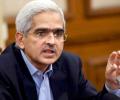
Reserve Bank of India (RBI) Governor Shaktikanta Das had stumped the market in the previous two policies - in August and in October - first with action and then with words. In August, it was the introduction of an incremental cash reserve ratio (I-CRR) to take out excess liquidity, which took the markets by surprise. In October, there was no action. Rather, what is known as "open mouth operation", Das' comment that the central bank might conduct open market operations (OMOs) by selling bonds tempered the euphoria in the bond markets after JP Morgan's inclusion of India in its Emerging Market Bond Index.
China's inflation rate rose to 8.5 per cent in April, bouncing back to hover near 12-year highs, bringing more pressure on government to tame rising prices, identified by it as the "biggest concern".The Consumer Price Index (CPI), main gauge of inflation, rose 8.5 per cent from 8.3 per cent in March and remained close to a nearly 12-year monthly high of 8.7 per cent recorded in February, the National Bureau of Statistics said.

Congress spokesperson Abhishek Manu Singhvi cited a viral video on social media platforms, claiming that in it Modi's voice is heard in a call with BJP rebel Kripal Parmar.

Bond markets, global as well as domestic, are likely headed towards hard times over the next three to six months, as higher vegetable prices, rising fuel costs, and improved wages may keep inflation hot, believe analysts, who expect the yields to hit 7.5 per cent in the near-term from the current 7.234 per cent. In this backdrop, they suggest investors can put in money in funds/instruments with residual maturity of 4 to 6 years, while longer-term investors can allocate cautiously to the longer end in the range beyond 7 years.
According to the global financial services major, inflation may remain sticky, with a possible El Nino effect on the monsoon likely to push up food prices and geopolitical uncertainties seen pumping up global commodity rates.

The Reserve Bank of India's (RBI's) State of the Economy report for October acknowledged a slowdown in some high-frequency indicators but expressed confidence in a recovery, aided by consumption demand during the festival season. "In India, aggregate demand is poised to shrug off the temporary slowdown in momentum in the second quarter of 2024-25 as festival demand picks up pace and consumer confidence improves," said the report released on Monday.
Concerned over the state of the world economy and depreciation of the US dollar, Chinese Premier Wen Jiabao on Tuesday said 2008 would be the "most difficult" for the country's economy as it faced the potential risk of economic fluctuations.
Retail inflation declined to an 18-month low of 4.7 per cent in April mainly due to falling prices of vegetables, oils and fats, and came closer to Reserve Bank's target of 4 per cent, showed government data released Friday. It was for the second month in a row that Consumer Price Index (CPI) based inflation remained within the RBI's comfort zone of below 6 per cent. The government has tasked the central bank to ensure retail inflation remains at 4 per cent with a margin of 2 per cent on either side.

The performance of banking and information technology (IT) stocks has had a significant impact on the composition of diversified mutual fund (MF) portfolios. Over the past two months, these sectors have become increasingly dominant, now constituting nearly 30 per cent of the total allocation in many diversified MF portfolios.

RBI watchers are going to be on tenterhooks for the next 3 weeks.

The decline in retail inflation has been mainly on account of falling prices of vegetables and pulses

Retail inflation in April softened further and fell to a four-month low of 4.87 per cent.

They have also called for giving cash to the poor, so that demand is generated in the economy.

'Understand how wedding expenses fit into your overall financial situation.' 'Evaluate how different levels of spending will impact other goals like retirement, travel, or housing.'
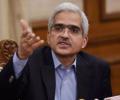
The Reserve Bank of India Governor Shaktikanta Das on Monday said that the "momentum of inflation is on a downward slope" and the central bank would continue to strike a delicate balance between the need to contain price rise and ensure economic growth. The Reserve Bank's inflation projections, Das said, are "robust" but contingent on downside and upside risks associated with the movement of global crude oil prices. The RBI takes into account a particular range within which crude prices are expected to fluctuate considering all the factors that can be anticipated and that can be sort of foreseen as of today, he said.
 © 2026 Rediff.com - Advertise with us - Disclaimer - Privacy Policy - Sitemap - Feedback - About us - Terms of use - Grievances